Tuesday, December 8, 2015

ART 211: Robotic Spider Dress
Intel Edison created a mechanical, virtual piece of clothing that is both visually unique and mechanically unique. The dress is intended to represent a spider, and wraps around the woman's body with its tentacles. The interesting part of the dress is that it responds to external stimuli. For instance, if the woman is approached in a rough manner, the tentacles will respond to protect the woman. If the woman is approached gently, the dress will respond in a soft seductive manner.
This dress, while it is interesting, is not something I foresee becoming a trend in the future. Mostly because of resources and finances. I also believe that it would take away the value of a human being to have the ability to use their own body parts to act in response to stimuli. For the sake of the design and art, this piece is very creative and smartly designed.
This dress, while it is interesting, is not something I foresee becoming a trend in the future. Mostly because of resources and finances. I also believe that it would take away the value of a human being to have the ability to use their own body parts to act in response to stimuli. For the sake of the design and art, this piece is very creative and smartly designed.
ART 211: Weirdest Music Videos
Music videos are a combination of numerous kinds of art: performance art, digital art, contemporary art, etc. Music videos are a visual way to aide the viewer in experiencing the music. Sometimes they tell a story, and sometimes they are simply for entertainment. Buzzfeed's article on "The 33 Weirdest Music Videos" was certainly strange. I could never understand the thought process in the producers mind for some of these videos.
One of the strangest yet most interesting videos to me was Passion Pit's "I'll be Alright," which showed a man making out with a piece of art. It used numerous other forms of performance art, such as life sized pills, a woman's head blowing up into smoke, etc. It makes me wonder if there was any symbolism behind these scenes or if it was produced for pure creativity.
One of the strangest yet most interesting videos to me was Passion Pit's "I'll be Alright," which showed a man making out with a piece of art. It used numerous other forms of performance art, such as life sized pills, a woman's head blowing up into smoke, etc. It makes me wonder if there was any symbolism behind these scenes or if it was produced for pure creativity.
ART 211: Flash Mobs
Flash mobs are a form of performance art in which large groups of people perform a song, dance, or act in the middle of an unexpected platform. Flash mobs have always been so interesting to me, and I always enjoy watching videos of them on YouTube. I have never experienced one in real life, but I would love to either watch one or be in one! I think the most interesting aspect of the flash mob is the reactions it draws from the onlookers. I watched the video of the "Frozen" flash mob in Grand Central Station. 207 actors stood frozen in place, in the middle of their action, while everyone else just walked around them or poked them to get them to move. It was humorous to hear the reactions of everyone around them; everyone was disheveled, some were confused, and some were concerned that there was actually something wrong with the people.
I give credit to the actors who do the flash mobs. To hold a pose for an extended amount of time is hard, especially if people are poking at them. Also, to keep that poker face must be tremendously difficult and require a lot of self control. I definitely would not be able to keep from smiling.
I give credit to the actors who do the flash mobs. To hold a pose for an extended amount of time is hard, especially if people are poking at them. Also, to keep that poker face must be tremendously difficult and require a lot of self control. I definitely would not be able to keep from smiling.
ART 211: Most Tattooed Woman
María José Cristerna is the woman, commonly referred to as the Vampire Woman, who has the most tattoos and body modifications in the world. Not only does she have tattoos covering almost every inch of her skin (from what I could see in the pictures) but she has numerous piercings. Her piercings are plentiful on her face, and she has many dermals in random spots. Additionally, she has body modifications such as sharpened teeth and horns implanted into her scalp. Personally, the look is not appealing to me. But I can understand how tattooing and piercing is a form of art and expression. Tattoos most of the time either tell a story or describe a person. The different array of colors on her body is definitely intriguing to look at.
The article says that Maria is a mother of four. Looking at these pictures, I can only imagine that her body modifications must've costed thousands of dollars. My question lies in how could she afford all of her work done to her body if she has four children? I'm also wondering if all the piercing, tattoos, and modifications would adversely affect her health.
All in all, the woman's art on her body is aesthetically interesting, and definitely can be viewed as an expression of art.
The article says that Maria is a mother of four. Looking at these pictures, I can only imagine that her body modifications must've costed thousands of dollars. My question lies in how could she afford all of her work done to her body if she has four children? I'm also wondering if all the piercing, tattoos, and modifications would adversely affect her health.
All in all, the woman's art on her body is aesthetically interesting, and definitely can be viewed as an expression of art.
Monday, December 7, 2015
ART 211: Sheep LED Art
A group of artists designed a very intricate project in which they used the sheep that they heard to create LED art. They wrapped strings of LED lights around each sheep, than used herders to bring them out in the field and arrange them to make certain pictures. Their last piece of art was to make a Mona Lisa out of sheep; entitled "Leonardo Baaa-vinci," which was quite humorous. They used the LED lights and put different colors on them and took photos, than arranged those photos to make the Mona Lisa. This project was extremely creative. My only concern is that those LED lights were not harmful to the sheeps skin or fur. Otherwise, I enjoyed this project as it was funny and creative.
ART 211: People as Pixels
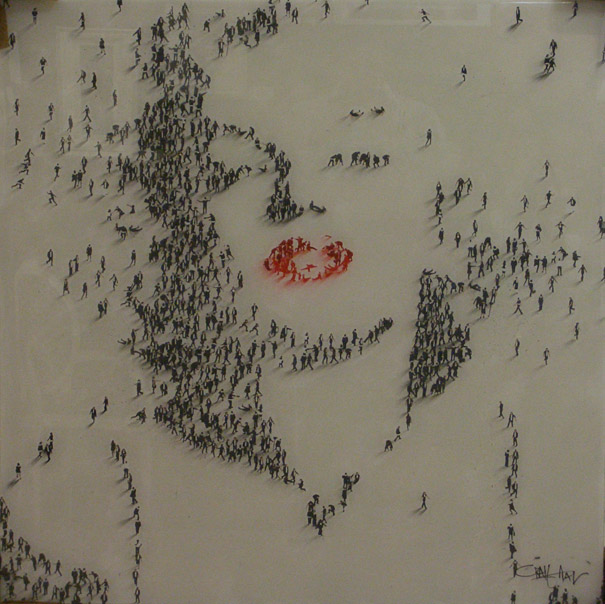 |
The "People as Pixels" article was very compelling. I thought that the idea was very creative, to arrange people together to serve as pixels for a photograph that would be taken up above. It reminded me of when I went to the my first football game, Gators vs. FSU, and the marching band arranged themselves to spell out "Gators" and put themselves in the shape of the state of Florida. I thought that was the coolest thing ever! I liked how this artist made the shapes a little more difficult. He used people to depict a portrait of a person. It makes me wonder if the artist was trying to convey a certain message, or if it was just a creative idea. Either way, I enjoyed these pieces.
ART 211: Felix the Cat Animations
Felix the Cat, an animated TV show about a cat and mice, was piloted in 1919. I watched some of the videos of the Felix the Cat and tried to compare it to animations in this day in age. Taking Avatar, one of the largest and most difficult animated movies yet, and comparing it to Felix the Cat is a tremendous comparison. The animation for Felix the Cat is very slow and pixelated. It takes multiple shots to show something as small as a tail moving or a facial expression difference. Even putting words in a word bubble takes multiple shots. It's engrossing to compare it to a movie like Avatar, which has an abundance of color and beautiful design. It's succession of animated shots moves so fast and smoothly, it hardly even seems like an animated production. Technology has really advanced from animations like Felix the Cat to Avatar. It makes me wonder the amount of work it was to put together one show of Felix the Cat, and how long that took.
ART 211: Photographs Throughout Time
Photography has been an art, science, and technology that has taken centuries to perfect, and is still improving each year. The first photograph was taken in 1826. It was a very grainy view of an estate from an upstairs window, and it hardly looks like anything. The article about photography than goes on to show how photos have progressed, and the different ways people experimented with taking photos and developing them. Having grown up in the technology era, it's hard to imagine that a photograph once took up to 30,000 seconds to capture an image. And after the image was captured, taking hours or even days to process the image. Photos are extremely common today. The phenomenon of photography blew up even more with the creation of cell phone cameras and the "selfie." It's a wonder to see how we have progressed over the decades.
ART 211: Leisure Diving
One of the more captivating links from section 4 was on "leisure diving." Leisure diving is described as jumping into a body of water, usually a pool, in a flat pose. Usually the diver will pose on their side and face the camera. The cameraman has to try to capture the pose before they loose it or fall into the water. I really enjoyed this slideshow of pictures, it was humorous to see the different ways one can be photographed chilling mid-air. My favorite shot was of the two men in the water holding up flower plants, and the man diving in holding a watering can and watering the plants on his side, mid-air. I believe that leisure diving photography could be extremely fun.


ART 211: Male Affection
The article on male affection in the earlier 1800s was very intriguing, and brought to my knowledge something that I hadn't realized before. While I did know that the term and identity of homosexuality wasn't really brought to the forefront until the very early 20th century, it didn't occur to me how men might've behaved with each other previous to the differentiation of gay and straight. These photos showed the comfort and intimacy males held with each other in their friend groups. Touching was not something that they were scared to do; in fact, it was encouraged. Many of the portraits showed men sitting on each other's laps, holding hands, their faces very close together, or their hands on each others upper legs. There appeared to be limited boundaries. It's intriguing to see these poses because if those kinds of things were to occur in this day in age, those men would automatically be called gay. Men these days only share a brief hug if there is a reunion after a long time, or if something traumatic has happened. It's fascinating to see how times have changed.
http://www.artofmanliness.com/2012/07/29/bosom-buddies-a-photo-history-of-male-affection/?fb_action_ids=10100429961300975&fb_action_types=og.likes&fb_source=other_multiline&action_object_map={%2210100429961300975%22%3A10150973012002869}&action_type_map={%2210100429961300975%22%3A%22og.likes%22}&action_ref_map=[]
http://www.artofmanliness.com/2012/07/29/bosom-buddies-a-photo-history-of-male-affection/?fb_action_ids=10100429961300975&fb_action_types=og.likes&fb_source=other_multiline&action_object_map={%2210100429961300975%22%3A10150973012002869}&action_type_map={%2210100429961300975%22%3A%22og.likes%22}&action_ref_map=[]
ART 211: Carmen Habanera
I enjoyed the YouTube video of the opera Carmen that took place in the Metropolitan in the 1970s. The opera Carmen is actually the opera that I wrote my paper on. I chose this opera for a couple of different reasons. I enjoy that the language is french, because I am actually of French-Canadian heritage and I like to try to listen to the words and make out which sentences that I can understand. Also, the music in the opera is exciting and romantic. Mostly, the aspect I enjoy the most about this opera is the storyline. The story is about a beautiful women named Carmen that has all the men in her town entranced by her beauty. They all want a chance at winning Carmen's heart. Carmen, knowing this and being confident in her good looks, uses this to her advantage. This opera differs from the rest because of it's music style, plot, and use of numerous characters. The stage is always filled with interesting props and back up characters, rather than a boring soliloquy.
ART 211: The Met
'Das Rheingold' at The Met: I enjoyed Robert Lepage's narration and take on the views of opera, and I could find myself relating to what he was saying. I myself have never been a fan of opera; I personally think that the music is a little creepy. Lepage spoke that many people do not understand the excitement behind opera and it takes a certain kind of person to appreciate it's beauty. He also spoke about the different aspects of the performances, such as the excitement it builds, the architect of the scene, and the actors and actresses that sometimes will play in an opera-based play. I do believe that if I were to enjoy opera, I would enjoy the story aspect of the music and plays that go on. I would like to see the architecture of the stage that producers and artists create.
ART 211: Paris Opera House

The photos of the Paris Opera House showed that opera houses are quite exquisite and beautiful. The architecture seems to be both Victorian, and ancient European. I can definitely admire and respect the amount of effort that directors of opera put behind their shows and music. An opera show or concert has much more artistic value than regular genres of music today sometimes have in their shows. I can see how opera appealed to the richer class, because the opera houses were very ornate and elite, and that is probably the type of audience the directors marketed opera to.
ART 211: Art vs. Design Article - Thoughts
In the Art vs. Design article by Craig A Elimeliah, the author discusses what he believes makes the difference in art and in design. As an artist, producer, and designer himself, he knows the different skill sets that each form of art require. The difference in art and design are outlined by a couple of different qualities. First, that design requires a more intricate framework and pattern. Second, while art is more thoughtful and usually expels emotion, design is not quite the same because of the planning that goes behind it. Lastly, design is based on trends and influences at the time..which is why we have different clothing and architecture fads. Art is more open to interpretation and preference.
I believe that I would prefer design over art, if given the chance to choose. I enjoy experimenting with different color patterns and schemes. I also am very detail-oriented, and I believe that personality aspect would aide me in design. Art seems to me to be more of a broad subject..open to interpretation. I tend to have difficulties completing a task when there are not detailed directions. For these reasons, design seems to be more appealing to me.
I believe that I would prefer design over art, if given the chance to choose. I enjoy experimenting with different color patterns and schemes. I also am very detail-oriented, and I believe that personality aspect would aide me in design. Art seems to me to be more of a broad subject..open to interpretation. I tend to have difficulties completing a task when there are not detailed directions. For these reasons, design seems to be more appealing to me.
Tuesday, November 17, 2015
ART 211: Futuristic Robot Gadjets
The Future of Cooking
When given the assignment of coming up with a futuristic, mechanical, robotic thing to create; I started to browse google on things virtually engineered. I also tried to think of things that would be beneficial to people at certain stages of life, such as the elderly. What do the elderly or the extremely sick have a hard time doing around their house? Finding and preparing food for themselves.
My vision is to create a Martha Stewart robot, of sorts. This robot will basically find, prepare, and deliver the cooked food to the guest at the home. I used a couple of different ideas, that have not yet been created but have been proposed, to sculpt my robot.
A lot of the times, people have so much food in their pantries and refrigerators that they aren't even aware of all of the items that they have. There was a futuristic design proposed of a fridge that will display all of the items within the fridge on the display screen of the front door. My robot will have a display screen that is linked with the fridge and pantry that will show all the food items in the house. The Martha Stewart robot will be able to navigate around the kitchen and prepare foods for the guests. She will have a "tool belt" full of kitchen gadgets on her at all times. Her stomach compartment will be a toaster oven, miniature oven, or a microwave--whatever the recipe calls for. She will be able to prepare and cook meals for those who aren't able to, and then she will serve it to the occupants of the house.
This future of cooking will be beneficial to those who are really unable to cook for themselves, such as the sick or the elderly. The only way that I could see this negatively impacting people's lives is if it became so easily accessible, that regular people that could afford a Martha Stewart robot would purchase them. This would mean that people that are perfectly capable of being mobile in their kitchen would start to become lazy and rely on a robot. That would take away from activity levels and the talent of culinary art. All in all, I think it would be a cool attempt at futuristic cooking, and I could see this becoming a prototype in the future.
Thursday, November 12, 2015
Monday, November 9, 2015
ART 211: Vaudeville
Vaudeville was a form of entertainment in the early 1900s that allowed people to escape from their everyday lives and enjoy a light-hearted show to lift their moods. Vaudeville does not limit itself to one act; it includes singing, dancing, comedy, juggling, and circus acts. The genre includes anything that is a form of entertainment and will positively affect the audience.
The aspect of Vaudeville that strikes me the most was the racist and sexist references that were made. I guess that it shouldn't surprise me, considering those comments and innuendos were perfectly normal during that time period; but, considering the day and age I grew up in, those kinds of things would not be acceptable. I didn't appreciate the black-face acts that we were shown in class, as I see that as extremely racist. It made me very thankful that we have moved away from that kind of racism in this century.
Also, it was interesting to see what Vaudeville performers would consider to be "racey" and sexually suggestive. There was one video clip that a woman was swinging on a swing only in leggings or tights. Today, that is an everyday clothing item. Back then, it was practically nudity. This is something that I obviously knew was a factor of that time period's history, but it was interesting how they used this as a comedic and entertainment act.
The aspect of Vaudeville that strikes me the most was the racist and sexist references that were made. I guess that it shouldn't surprise me, considering those comments and innuendos were perfectly normal during that time period; but, considering the day and age I grew up in, those kinds of things would not be acceptable. I didn't appreciate the black-face acts that we were shown in class, as I see that as extremely racist. It made me very thankful that we have moved away from that kind of racism in this century.
Also, it was interesting to see what Vaudeville performers would consider to be "racey" and sexually suggestive. There was one video clip that a woman was swinging on a swing only in leggings or tights. Today, that is an everyday clothing item. Back then, it was practically nudity. This is something that I obviously knew was a factor of that time period's history, but it was interesting how they used this as a comedic and entertainment act.
ART 211: Broadway
Broadway is a form of artistic entertainment in which both art in the form of music and physical objects such as paintings and props are used. Additionally, broadway utilizes art by the way that the performers dress up and paint their faces for the show.
I've always wanted to go to a broadway show, and it will forever be on my bucket list until it is accomplished. The closest thing I've been to that may resemble a broadway show is Cirque du Soleil, which I actually went to a couple of weeks ago. I enjoyed every aspect of it and I really think I would enjoy an actual broadway show.
After perusing the links, the video's that caught my attention were on "West Side Story." This one is a classic and probably the only broadway I've heard much about, which is why I would like to see it in person. I do believe that I would really enjoy the singing and dancing aspect the most. Broadways seem like a perfect form of entertainment in which one can experience all of the different art forms in one sitting, and immerse themselves into another storyline for a couple of hours. I hope to experience broadway soon.
I've always wanted to go to a broadway show, and it will forever be on my bucket list until it is accomplished. The closest thing I've been to that may resemble a broadway show is Cirque du Soleil, which I actually went to a couple of weeks ago. I enjoyed every aspect of it and I really think I would enjoy an actual broadway show.
After perusing the links, the video's that caught my attention were on "West Side Story." This one is a classic and probably the only broadway I've heard much about, which is why I would like to see it in person. I do believe that I would really enjoy the singing and dancing aspect the most. Broadways seem like a perfect form of entertainment in which one can experience all of the different art forms in one sitting, and immerse themselves into another storyline for a couple of hours. I hope to experience broadway soon.
ART 211: Bladerunner
The Bladerunner is a science fiction film about a futuristic world that was predicted many years ago. The directors and producers of this film attempted to put a dystopic, punk twist on what would potentially be the 21st century. The film was definitely interesting to watch, with all of its technological aspects and thrill from the action scenes. As far as 21st century predictions, the movie got some things wrong and some things wildly blown out of proportion.
As far as technology goes with communication, most of the tools they used in the movie were accurate. They implemented video chatting technology as their main source, which is close to accurate as far as today's main source of technology. We do use Skype and FaceTime frequently, but we use text messaging and calling far more.
The Bladerunner exaggerated with a lot of the technological aspects. While we are working on hover vehicles, we do not yet have flying cars; which was the main source of transportation in the movie. The overcrowded, stacked levels of buildings and roads were also incorrect. While there are definitely areas in the world that may exhibit overcrowding, it is definitely not as bad as it is portrayed in the movie.
Another aspect that was interesting in the movie was the different types of people. They placed a large emphasis on the Asian culture, whereas in reality, the Asian culture, while largely prevalent, is not the overriding ethnicity in America right now. Also, they used synthetic people. While we are working on the scientific and medical discovery of synthetically creating organs, we are not nearly as close as the movie was in creating whole human beings.
Lastly, one of the biggest features of the film that I noticed was off was the vibe and setting of the film. The film portrayed Los Angeles in the year 2019 to be very dystopic. And by that, I mean, extremely dark, evil, and full of negative emotions. America, and Los Angeles, today is not like that at all. In the film, it was very dark and nastily polluted. The pollution level was overtly exaggerated and we are a very well-lit country.
As far as technology goes with communication, most of the tools they used in the movie were accurate. They implemented video chatting technology as their main source, which is close to accurate as far as today's main source of technology. We do use Skype and FaceTime frequently, but we use text messaging and calling far more.
The Bladerunner exaggerated with a lot of the technological aspects. While we are working on hover vehicles, we do not yet have flying cars; which was the main source of transportation in the movie. The overcrowded, stacked levels of buildings and roads were also incorrect. While there are definitely areas in the world that may exhibit overcrowding, it is definitely not as bad as it is portrayed in the movie.
Another aspect that was interesting in the movie was the different types of people. They placed a large emphasis on the Asian culture, whereas in reality, the Asian culture, while largely prevalent, is not the overriding ethnicity in America right now. Also, they used synthetic people. While we are working on the scientific and medical discovery of synthetically creating organs, we are not nearly as close as the movie was in creating whole human beings.
Lastly, one of the biggest features of the film that I noticed was off was the vibe and setting of the film. The film portrayed Los Angeles in the year 2019 to be very dystopic. And by that, I mean, extremely dark, evil, and full of negative emotions. America, and Los Angeles, today is not like that at all. In the film, it was very dark and nastily polluted. The pollution level was overtly exaggerated and we are a very well-lit country.
ART 211: Art in the News Project
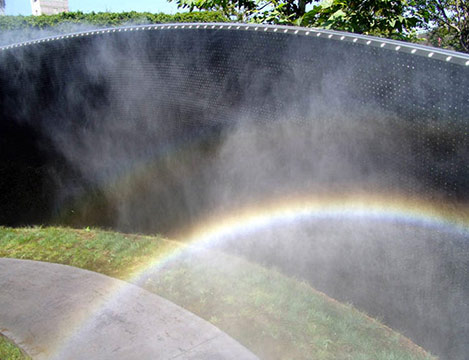
For my art in the news project, I tried to find something that utilizes modern technology in an artistic and creative way. My taste in art is very modern and new age. So, when I found the work of Ned Kahn, I was entranced by his modern take on using organic themes such as earth elements and natural disasters, and combining those themes with modern substances such as skyscrapers and metals. Ned Kahn works with architects to display what looks to be fire, wind, water, sand, or natural disasters such as tornadoes and hurricanes. He also displays his works in large metropolitan areas, where they can be seen and used by numerous people. He uses different metals to reflect off the sun, rain, or shade to make certain effects; such as the "Rainbow Ardor" shown below. I find all of his works of art very aesthetically appealing, and I liked how he used technology to make art that is still organic and useful.

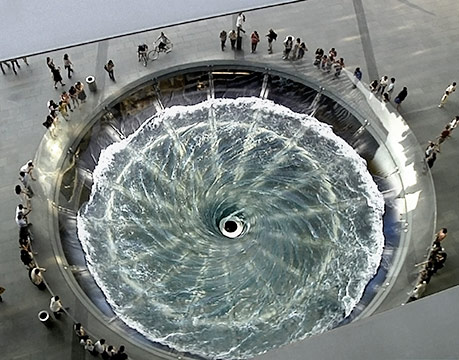
This last picture is the Rain Oculus. It is a whirlpool that functions as a skylight and a rain collector. Aside from being beautiful and interesting to watch, it also has useful and environmental functions.
This last picture is the Rain Oculus. It is a whirlpool that functions as a skylight and a rain collector. Aside from being beautiful and interesting to watch, it also has useful and environmental functions.
ART 211: 3D Printing
Three-dimensional printing is an aspect of art and technology that I found riveting and very useful. Learning about this and the many possibilities it lends was definitely one of my favorite lessons so far in this semester. I recently Google searched 3D printing in the news and found an incredible article on a new way for those that are visually impaired to view art. Essentially, a 3D printing company that is based in New York, has come up with an idea for the blind to mentally see art by using their hands to feel the printed art. This idea was originated by neuroplastician and neuroscientist Dr. Paul Bach-y-Rita.
The human brain is able to process a picture of art in their minds just by tactile use of their fingertips. So, just how we that are able to see can visualize a piece of art; the blind can now touch the 3D printed art pieces and visualize it in their minds by feeling the shape.
The New York company is taking photographs, paintings, and other pieces of art and using different textures in order to raise the picture and make it three-dimensional. Additionally, there are sensors placed within each section of the art piece that have audio attachments to tell the blind people what exactly they are looking at. For example, if they touch an apple, an auditory device will inform them of the item they touch.
I think that this is an excellent project. I really like that artists and scientists are trying to find more ways for those less fortunate to experience beauty and artistic creativity. It is unfortunate that they, the blind, cannot see the beautiful colors displayed, but with this new form of 3D printing, they can at least feel the textures and shapes to be able to visualize the picture.
Here are examples:


The human brain is able to process a picture of art in their minds just by tactile use of their fingertips. So, just how we that are able to see can visualize a piece of art; the blind can now touch the 3D printed art pieces and visualize it in their minds by feeling the shape.
The New York company is taking photographs, paintings, and other pieces of art and using different textures in order to raise the picture and make it three-dimensional. Additionally, there are sensors placed within each section of the art piece that have audio attachments to tell the blind people what exactly they are looking at. For example, if they touch an apple, an auditory device will inform them of the item they touch.
I think that this is an excellent project. I really like that artists and scientists are trying to find more ways for those less fortunate to experience beauty and artistic creativity. It is unfortunate that they, the blind, cannot see the beautiful colors displayed, but with this new form of 3D printing, they can at least feel the textures and shapes to be able to visualize the picture.
Here are examples:
Friday, October 30, 2015
ART 211: Grid Art

Thursday, September 17, 2015
ART 211: Coldplay
Video: Coldplay - Paradise - A Capella: This video was definitely my favorite of the selection we have watched so far. Coldplay is one of my favorite bands so it was very interesting to see Mike Tompkin's take on the song 'Paradise.' This artist is extremely talented, the different types of instrumentals he made just by using his voice and contorting his mouth was mind-blowing. There were times I could hear what sounded to be an organ, or an electric guitar, and it was hard for me to believe that those noises all came from his mouth.
ART 211: Madama Butterfly
My take on the Madama Butterfly animation, was that it was interesting to watch the story unfold but quite disturbing. While the music was beautiful in some forms, I myself am not much of a fan of opera, so I couldn't exactly bring myself to enjoy the music. As for the art animation, it seemed to be very outdated so I am wondering when this animation was created. My guess would be early to mid 1900's based on the animation and music.
The story within the short film was quite sad. A navy, it seemed to be, impregnated a woman and left her deserted on an island to have his child and than when the child was much older, took the child and left the woman to die on the island. In my opinion, what was disturbing about the animation was: the distorted sex scene, how the producer used a fish to represent the pregnancy, and how that fish somehow morphed into a child, and lastly the end of the animation where the women literally ripped herself apart and became a butterfly. I do believe that this sort of disturbing type of scene goes along quite well with the depressing opera music. Additionally, the producer painted a perfect scene of sadness, with the art animation of the island. They included dark colors to paint the island, and storms to create a constant scene of sadness. The animation, all in all, was very interesting, and I do believe many artists or individuals that are interested in this type of art and music would enjoy it.
The story within the short film was quite sad. A navy, it seemed to be, impregnated a woman and left her deserted on an island to have his child and than when the child was much older, took the child and left the woman to die on the island. In my opinion, what was disturbing about the animation was: the distorted sex scene, how the producer used a fish to represent the pregnancy, and how that fish somehow morphed into a child, and lastly the end of the animation where the women literally ripped herself apart and became a butterfly. I do believe that this sort of disturbing type of scene goes along quite well with the depressing opera music. Additionally, the producer painted a perfect scene of sadness, with the art animation of the island. They included dark colors to paint the island, and storms to create a constant scene of sadness. The animation, all in all, was very interesting, and I do believe many artists or individuals that are interested in this type of art and music would enjoy it.
Friday, September 11, 2015
ART 211: Barthes Wrestling
Roland Barthes, "The World of Wrestling," took an interesting approach to the different dynamics one can observe in the sport of wrestling. I appreciated the way that Barthes highlighted how wrestling can be seen as an art form. He described one large attribute of wrestling, which is a topic we often discuss in class, which is the spectacle aspect of wrestling. The sport is aesthetically pleasing due to the large performance that takes place. The anticipation of the fight, watching fist to flesh combat, and sweating human forms are all examples of visuals that can be observed with wrestling. In this sense, it is simple to see how it can be construed as an art.
Additionally, I appreciated the way Barthes painted the view of the stage. Bright lights that shine down so sharply, dark crowds, and the stage placed in the center of the room; makes for a perfect spectacle. Barthes also went into immense detail on how the body language of the wrestlers spoke volumes and had symbolism behind every pose. My favorite line in the reading states "What the public wants is the image of passion, not passion itself," because I feel that sums up the art aspect behind wrestling. Wrestling is all about expression through body language and movement, and the spectacle that it creates.
Additionally, I appreciated the way Barthes painted the view of the stage. Bright lights that shine down so sharply, dark crowds, and the stage placed in the center of the room; makes for a perfect spectacle. Barthes also went into immense detail on how the body language of the wrestlers spoke volumes and had symbolism behind every pose. My favorite line in the reading states "What the public wants is the image of passion, not passion itself," because I feel that sums up the art aspect behind wrestling. Wrestling is all about expression through body language and movement, and the spectacle that it creates.
Thursday, September 10, 2015
ART 211: September 11, 2001
September 11th was a tragic day that will forever be remembered in America's history, as well as world new's. As it took place in 2001, and I was only 5 years of age, I can't say that I really remember the day in stark detail. I was living in Vermont at the time, so I was relatively close to the scene. I do remember the week that it happened and all of the high emotions surrounding this time: confusion, anger, and immense sadness are just a few emotions I remember sensing around me. As for the day itself, I recall my parents watching the news and becoming very worried. Any other details, in my perspective, are blurry to me considering I was so young and I didn't really understand what was going on at the time. Nevertheless, September 11th was a day when America's fast paced lifestyle took a halt while the whole world watched this tragedy occur.
Monday, September 7, 2015
ART 211: Raul Cuero's Interview
Raul Cuero, a microbiologist, tells his story about how despite economic, social, and global boundaries he was able to reach his goals for his career and accomplish many feats. The interview is inspiring to watch and hear about all of the things he had to overcome. He spoke on many aspects that can serve as a reminder or inspiration for us all. Many of these concepts can be applied to daily life. Cuero said that "it is important to have a universal consciousness to succeed," which is an important thing to remember because many things are not handed to us, but earned. We must be conscious of those around us and respect the boundaries others are facing as well.
Raul also spoke on creativity quite a lot, and his opinion of creativity in today's age is very relevant to this course. Raul's opinion states that people are at a creative disadvantage due to the luxuries we are given. This generation was born into an electronic and technology era, and Raul believes that contributes to our lack of creativity. He says the best way to experience creative thoughts is to go outside and observe nature beyond the scope of man-made tools. Ideas emerge from observations as well as ideas emerging between individuals. We can apply this concept to our daily life by remembering to experience life outside of technology and letting our creativity flow between ourselves and others.
Raul also spoke on creativity quite a lot, and his opinion of creativity in today's age is very relevant to this course. Raul's opinion states that people are at a creative disadvantage due to the luxuries we are given. This generation was born into an electronic and technology era, and Raul believes that contributes to our lack of creativity. He says the best way to experience creative thoughts is to go outside and observe nature beyond the scope of man-made tools. Ideas emerge from observations as well as ideas emerging between individuals. We can apply this concept to our daily life by remembering to experience life outside of technology and letting our creativity flow between ourselves and others.
Sunday, September 6, 2015
ART 211: Juan Carlos Delgado
Juan Carlos Delgado's work seems to be very emotional and deep. The artist mostly uses dark colors, subtle lines, and shadowing. His art is considered contemporary, and displays abstract images, bodies that are not whole, and statues of objects. All of these examples show a contemporary theme. I enjoy the photographs of all the different ways he worked with light to display art; I found that very ethereal and beautiful. His frozen sculptures were also very unique. There is a lot of detail to be explored in the frozen sculptures. Overall, Delgado's works are aesthetically pleasing.
The pictures displayed of his works of art show that he uses many different forms to express art. He has paintings, photographs, as well as sculptures. His work is considered multimedia perhaps because he uses many different forms of media and also because the work is displayed in what looks to be an online magazine.
The pictures displayed of his works of art show that he uses many different forms to express art. He has paintings, photographs, as well as sculptures. His work is considered multimedia perhaps because he uses many different forms of media and also because the work is displayed in what looks to be an online magazine.
ART 211 Class 09/01/15
ART 211 seems to be an interesting class and I am excited to learn about art and its relations to multimedia and hypermedia! I originally chose the class because the course description appealed to me when talking about how the students will learn how technology connects with art. Being a child born in the technology era, the media places a large emphasis on my own life and I'd like to learn how it has influenced art. I'm curious to see if we will be learning about how art has developed over time due to the technology take over in these last few centuries. My expectations include learning the different art forms that technology has a role in, and exploring the different artistic movements. I hope to gain greater knowledge about the art we see in everyday life and how technology has taken place in developing it. I feel that this course will strengthen my appreciation for both multimedia and art.
My name is Angela Trombley, but I go by Angie. Fun fact: my nickname actually spells ART! I am originally born and raised in Vermont but I moved to Florida with my family about 5 years ago. I'm a sophomore at the University of Tampa and my major is Applied Sociology. I've always been very interested in art but haven't really explored different courses in the field, so I am excited to begin my exploration of the art world!
My name is Angela Trombley, but I go by Angie. Fun fact: my nickname actually spells ART! I am originally born and raised in Vermont but I moved to Florida with my family about 5 years ago. I'm a sophomore at the University of Tampa and my major is Applied Sociology. I've always been very interested in art but haven't really explored different courses in the field, so I am excited to begin my exploration of the art world!
Subscribe to:
Posts (Atom)