Pages

Tuesday, November 17, 2015

ART 211: Futuristic Robot Gadjets

The Future of Cooking

When given the assignment of coming up with a futuristic, mechanical, robotic thing to create; I started to browse google on things virtually engineered. I also tried to think of things that would be beneficial to people at certain stages of life, such as the elderly. What do the elderly or the extremely sick have a hard time doing around their house? Finding and preparing food for themselves. 
My vision is to create a Martha Stewart robot, of sorts. This robot will basically find, prepare, and deliver the cooked food to the guest at the home. I used a couple of different ideas, that have not yet been created but have been proposed, to sculpt my robot. 
A lot of the times, people have so much food in their pantries and refrigerators that they aren't even aware of all of the items that they have. There was a futuristic design proposed of a fridge that will display all of the items within the fridge on the display screen of the front door. My robot will have a display screen that is linked with the fridge and pantry that will show all the food items in the house. The Martha Stewart robot will be able to navigate around the kitchen and prepare foods for the guests. She will have a "tool belt" full of kitchen gadgets on her at all times. Her stomach compartment will be a toaster oven, miniature oven, or a microwave--whatever the recipe calls for. She will be able to prepare and cook meals for those who aren't able to, and then she will serve it to the occupants of the house.
This future of cooking will be beneficial to those who are really unable to cook for themselves, such as the sick or the elderly. The only way that I could see this negatively impacting people's lives is if it became so easily accessible, that regular people that could afford a Martha Stewart robot would purchase them. This would mean that people that are perfectly capable of being mobile in their kitchen would start to become lazy and rely on a robot. That would take away from activity levels and the talent of culinary art. All in all, I think it would be a cool attempt at futuristic cooking, and I could see this becoming a prototype in the future. 

Monday, November 9, 2015

ART 211: Vaudeville

Vaudeville was a form of entertainment in the early 1900s that allowed people to escape from their everyday lives and enjoy a light-hearted show to lift their moods. Vaudeville does not limit itself to one act; it includes singing, dancing, comedy, juggling, and circus acts. The genre includes anything that is a form of entertainment and will positively affect the audience.
The aspect of Vaudeville that strikes me the most was the racist and sexist references that were made. I guess that it shouldn't surprise me, considering those comments and innuendos were perfectly normal during that time period; but, considering the day and age I grew up in, those kinds of things would not be acceptable. I didn't appreciate the black-face acts that we were shown in class, as I see that as extremely racist. It made me very thankful that we have moved away from that kind of racism in this century.
Also, it was interesting to see what Vaudeville performers would consider to be "racey" and sexually suggestive. There was one video clip that a woman was swinging on a swing only in leggings or tights. Today, that is an everyday clothing item. Back then, it was practically nudity. This is something that I obviously knew was a factor of that time period's history, but it was interesting how they used this as a comedic and entertainment act.

ART 211: Broadway

Broadway is a form of artistic entertainment in which both art in the form of music and physical objects such as paintings and props are used. Additionally, broadway utilizes art by the way that the performers dress up and paint their faces for the show.
I've always wanted to go to a broadway show, and it will forever be on my bucket list until it is accomplished. The closest thing I've been to that may resemble a broadway show is Cirque du Soleil, which I actually went to a couple of weeks ago. I enjoyed every aspect of it and I really think I would enjoy an actual broadway show.
After perusing the links, the video's that caught my attention were on "West Side Story." This one is a classic and probably the only broadway I've heard much about, which is why I would like to see it in person. I do believe that I would really enjoy the singing and dancing aspect the most. Broadways seem like a perfect form of entertainment in which one can experience all of the different art forms in one sitting, and immerse themselves into another storyline for a couple of hours. I hope to experience broadway soon.

ART 211: Bladerunner

The Bladerunner is a science fiction film about a futuristic world that was predicted many years ago. The directors and producers of this film attempted to put a dystopic, punk twist on what would potentially be the 21st century. The film was definitely interesting to watch, with all of its technological aspects and thrill from the action scenes. As far as 21st century predictions, the movie got some things wrong and some things wildly blown out of proportion.
As far as technology goes with communication, most of the tools they used in the movie were accurate. They implemented video chatting technology as their main source, which is close to accurate as far as today's main source of technology. We do use Skype and FaceTime frequently, but we use text messaging and calling far more.
The Bladerunner exaggerated with a lot of the technological aspects. While we are working on hover vehicles, we do not yet have flying cars; which was the main source of transportation in the movie. The overcrowded, stacked levels of buildings and roads were also incorrect. While there are definitely areas in the world that may exhibit overcrowding, it is definitely not as bad as it is portrayed in the movie.
Another aspect that was interesting in the movie was the different types of people. They placed a large emphasis on the Asian culture, whereas in reality, the Asian culture, while largely prevalent, is not the overriding ethnicity in America right now. Also, they used synthetic people. While we are working on the scientific and medical discovery of synthetically creating organs, we are not nearly as close as the movie was in creating whole human beings.
Lastly, one of the biggest features of the film that I noticed was off was the vibe and setting of the film. The film portrayed Los Angeles in the year 2019 to be very dystopic. And by that, I mean, extremely dark, evil, and full of negative emotions. America, and Los Angeles, today is not like that at all. In the film, it was very dark and nastily polluted. The pollution level was overtly exaggerated and we are a very well-lit country.

ART 211: Art in the News Project

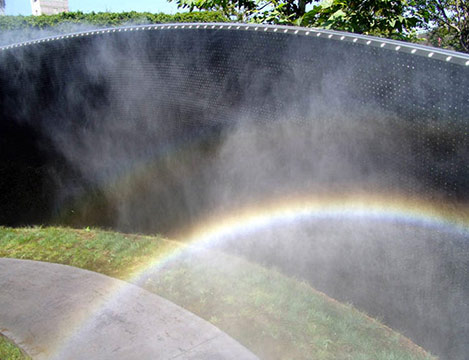
For my art in the news project, I tried to find something that utilizes modern technology in an artistic and creative way. My taste in art is very modern and new age. So, when I found the work of Ned Kahn, I was entranced by his modern take on using organic themes such as earth elements and natural disasters, and combining those themes with modern substances such as skyscrapers and metals. Ned Kahn works with architects to display what looks to be fire, wind, water, sand, or natural disasters such as tornadoes and hurricanes. He also displays his works in large metropolitan areas, where they can be seen and used by numerous people. He uses different metals to reflect off the sun, rain, or shade to make certain effects; such as the "Rainbow Ardor" shown below. I find all of his works of art very aesthetically appealing, and I liked how he used technology to make art that is still organic and useful.

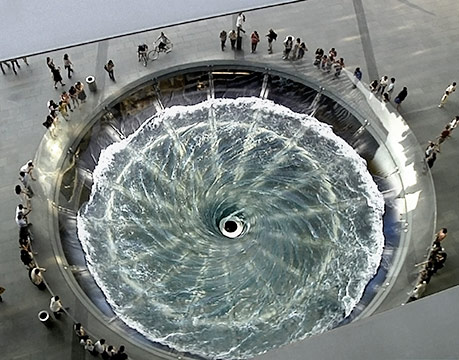
This last picture is the Rain Oculus. It is a whirlpool that functions as a skylight and a rain collector. Aside from being beautiful and interesting to watch, it also has useful and environmental functions.

ART 211: 3D Printing

Three-dimensional printing is an aspect of art and technology that I found riveting and very useful. Learning about this and the many possibilities it lends was definitely one of my favorite lessons so far in this semester. I recently Google searched 3D printing in the news and found an incredible article on a new way for those that are visually impaired to view art. Essentially, a 3D printing company that is based in New York, has come up with an idea for the blind to mentally see art by using their hands to feel the printed art. This idea was originated by neuroplastician and neuroscientist Dr. Paul Bach-y-Rita. 
The human brain is able to process a picture of art in their minds just by tactile use of their fingertips. So, just how we that are able to see can visualize a piece of art; the blind can now touch the 3D printed art pieces and visualize it in their minds by feeling the shape. 
The New York company is taking photographs, paintings, and other pieces of art and using different textures in order to raise the picture and make it three-dimensional. Additionally, there are sensors placed within each section of the art piece that have audio attachments to tell the blind people what exactly they are looking at. For example, if they touch an apple, an auditory device will inform them of the item they touch. 
I think that this is an excellent project. I really like that artists and scientists are trying to find more ways for those less fortunate to experience beauty and artistic creativity. It is unfortunate that they, the blind, cannot see the beautiful colors displayed, but with this new form of 3D printing, they can at least feel the textures and shapes to be able to visualize the picture.
Here are examples: 
George Washington Crossing The Delaware as a 3D Tactile Fine Art Print